
Writing your statements
On iteration
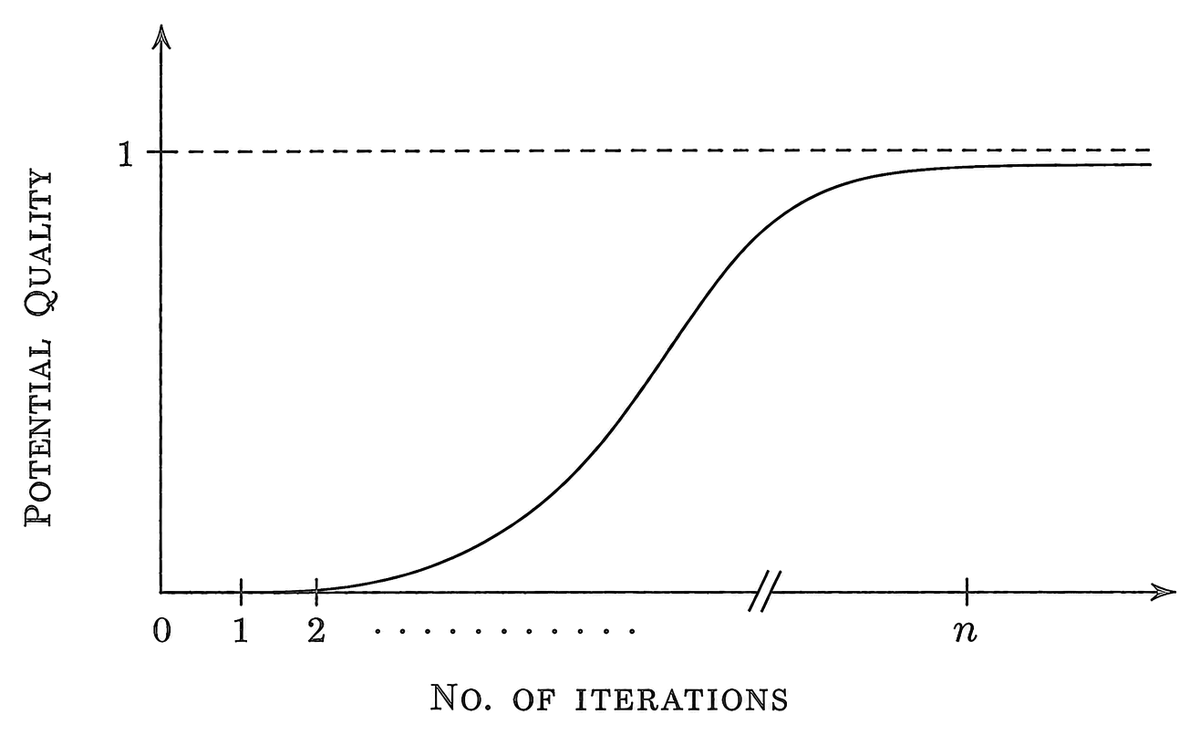
Your first draft will suck. Your second will too. Somewhere around the twelfth you may start to get a sense of what you were trying to say in the first place.
The best way through a project like this is to treat it as self-discovery by iteration. Let yourself suck for a while. Everyone who is going to read your drafts has crossed this same moat and they will not judge you for it. The faster you suck, the faster you will distill something that you are proud of.
Both a graduate application and a GRFP proposal are, underneath, an occasion to unveil to yourself the story of how you got here and where you intend to go. Without an external deadline, it is unlikely that you would ever sit down and reflect on your life and plan your future with the intensity that aligning a career with its motivations actually takes. So go at the writing process with some romanticism and self-obsession. This reframing will produce more honest materials for your application and will make the tedious process of compiling them worthwhile.
“Enjoy the process.” — every Hallmark card ever, but it’s valid.
The dark cloud that is the first draft
Write the first outline on paper.
Something about paper takes the pressure off. This copy will never be emailed and never be shown to anyone, and that is exactly what makes it useful: it gives you room to be honest about where you come from and what actually moves you. This sheet will become a solid reference for your first draft, where you can then cull through the details that you wrote down and pick apart the bits and pieces that you are willing to share with a stranger.
This step also guards against a common failure. It is easy to slip into saying what you think is expected of you, or what sounds good, or what has gotten you by thus far, without ever cross-checking whether the script that you use is true. Give yourself the space to be honest and you will usually find a strange amount of coherence between where you are now and where you are going. Finding this coherence will help fuel the next chapter of your life and, in the short term, your application process.
On subsequent drafts
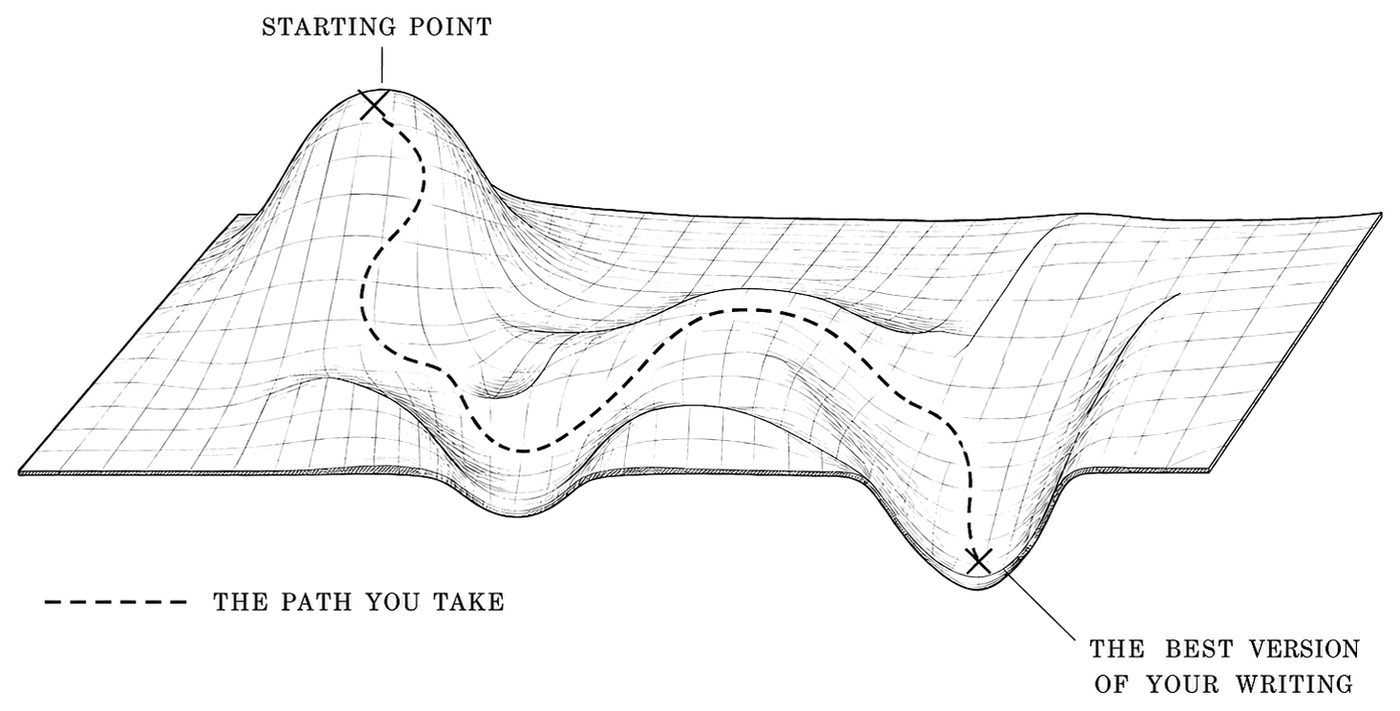
The single largest gain in quality comes from putting your drafts in front of as many people as you can.
Criticism carries a lot of negative charge, but only because we treat what we produce as an extension of ourselves. It isn’t. The essay is a product you are building.
Example: if you were designing a coffee mug and a reviewer told you that the ceramic was too thin and that they burned themselves, you would make a thicker version. You wouldn’t sulk that the laws of thermodynamics work in this way.
This reframing reveals something that usually gets missed: you are not writing this application alone. A team is building these materials, and your actual job is assembling and organizing that team to fulfill your desired objective. Holding the work at a distance makes the iteration faster and considerably less painful, and it lets you act as the facilitator of the project rather than as the project itself.
The passes go roughly in this order.
During the initial iterations, ignore semantics and get the concepts down. Is the logic coherent? Can every claim be supported? Work closely with your primary advisor here. They will point you in the right direction and hand you the sources you are missing.
Once the core concepts are laid out, introduce a narrative arc and start thinking of the most digestible way to present the information. It is at this point that you can involve tertiary mentors such as surrounding PIs and postdocs.
Then, once the content is settled and your reviewers agree on it, hand it to someone adjacent to your field. We get stuck in our local vocabularies and stop hearing when phrasing is convoluted or clotted with jargon. Someone one step outside your topic will catch these blocks.
There is a fourth kind of reader worth finding which made the greatest difference in my writing. On a research assistant’s salary, I paid a local med student with an admirable CV to review my PhD application materials over two rounds. Every scientist reading my essays was reading them for scientific merit. They read the guidelines of the application and held my statement against what the reviewers actually cared about, making explicit what I was trying to convey.
Even three hours of work daily in the evening will accomplish an inordinate amount of progress. I myself compiled my application in 1.5 months and so I am not one to lecture you on starting early.
On rejection
Outcomes are noisy. Review panels are small, reviewer assignment is close to random, and strong applications are declined every year for reasons entirely removed from the quality of the application itself.
What submitting does is improve your odds, and your odds are the only part of this process that you can control. None of this makes rejection pleasant, but if what you take out of the process is a clearer account of your own work and where it is going, the work is still worth committing your all to.
GRFP specific materials
- Planning your application — selecting a lab for your research proposal & organizing your application
- Requesting recommendation letters — how to reach out to your recommenders